
What Is Shoe Size Conversion and Why You Need It

Shoe size conversion is the process of translating a shoe size from one country's sizing system to another. With global online shopping, understanding how to convert between US, UK, EU, and other international sizing systems has never been more important. A shoe size conversion calculator is essential because there is no universal standard — each region developed its own system based on different units of measurement, starting points, and sizing conventions. The US system uses barleycorns (1/3 inch), the UK system uses the same unit but starts at a different baseline, the EU system uses Paris points (2/3 cm), and Asian systems like Japan, Mexico, and China are based on direct foot length in centimeters. Buying shoes from international brands or through online marketplaces without understanding these differences frequently results in ill-fitting footwear, costly return shipping, and frustration. Our shoe size conversion calculator supports adults, kids (ages 5-12), and infants/toddlers (ages 0-4), with conversions across US/Canada, UK/India, EU, Japan/Mexico, and China sizing, plus foot length in centimeters, millimeters, and inches. For other measurement conversions, try our conversion calculator for units of length, weight, and more.
How to Convert Shoe Sizes
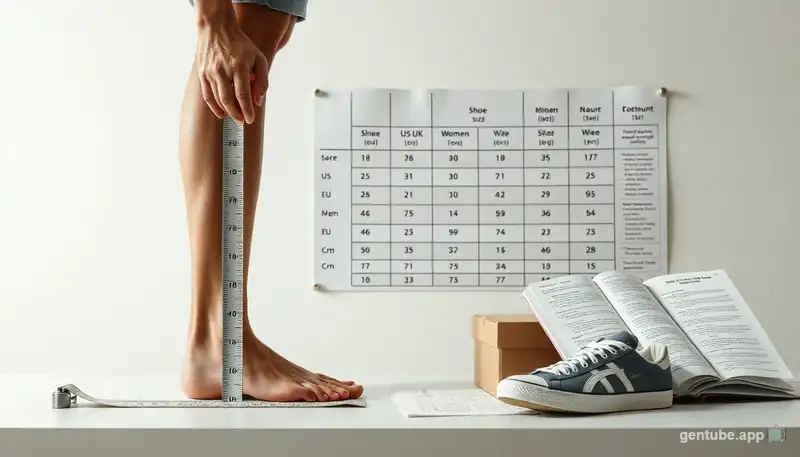
Converting shoe sizes between systems is straightforward with the right tool. Simply select your known sizing system from the dropdown, enter your size, and the shoe size conversion calculator instantly displays equivalent sizes across all supported systems. The calculator uses standard conversion formulas that account for the different measurement bases and starting points of each system. For example, US women's sizes are calculated using the formula 3 × L - 21, where L is foot length in inches. UK adult sizes use 3 × L - 23, starting 2 sizes smaller than US. EU sizes use 3/2 × L_cm + 2, where L_cm is foot length in centimeters. Japan and Mexico sizes use direct foot length in centimeters (no formula adjustment), while China uses 2 × L_cm - 10. The calculator also handles half sizes, which represent 1/2 barleycorn (about 4.23 mm) in US/UK systems and 1 Paris point (about 6.67 mm) in EU systems. Understanding these formulas helps explain why the same foot measures differently across systems — a US men's 10 is a UK 9, EU 43, and approximately 27 cm foot length.
US Shoe Sizing System Explained

The United States shoe sizing system is one of the most widely used systems globally, particularly in North America. It is based on the barleycorn, an ancient unit of measurement equal to 1/3 inch (approximately 8.47 mm). Each full shoe size represents one barleycorn of difference in foot length. The US system uses different starting points for men, women, and children. US men's sizing starts at size 1, which corresponds to a foot length of 7.5 inches (approximately 19.1 cm). Each subsequent size adds 1/3 inch. US women's sizing uses a different baseline: women's size 1 starts at a foot length of approximately 7 inches (17.8 cm), which is why women's sizes are typically 1.5 to 2 sizes larger than men's for the same foot length. For example, a US men's size 8 is equivalent to approximately US women's size 9.5. The US system also includes half sizes (1/2 barleycorn or about 4.23 mm), and width designations ranging from AAA (narrowest) to EEE (widest), though D is standard for men and B is standard for women. When using a shoe size conversion tool, always specify whether you are entering a men's, women's, or children's size, as the conversions differ significantly. The calculator above has separate tabs for adults, kids, and infants/toddlers to handle these variations automatically and ensure accurate conversions across all supported international sizing systems including US, UK, EU, Japan, Mexico, and China.
UK Shoe Sizing System Explained
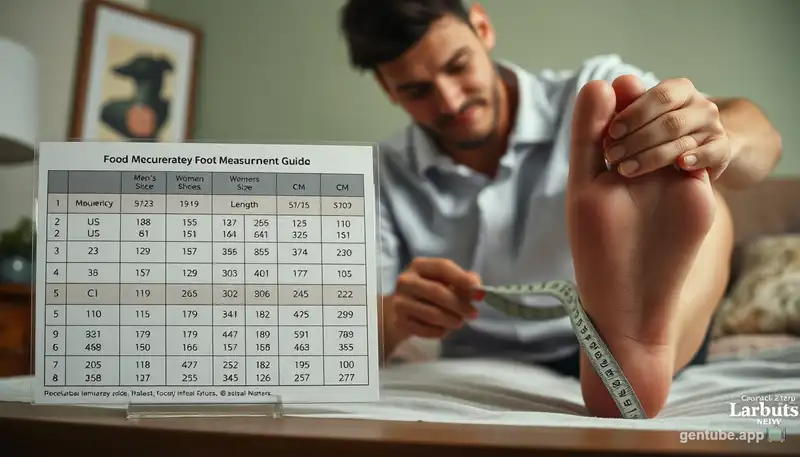
The United Kingdom shoe sizing system is one of the oldest standardized systems still in use, with origins dating back to the 14th century when King Edward II declared that three barleycorns equal one inch. Like the US system, the UK system uses the barleycorn (1/3 inch) as its base unit, with each full size representing 1/3 inch of foot length. However, the UK system starts at a different baseline than the US system. UK adult sizing begins at size 0, which corresponds to a child's size 13 (approximately 7.67 inches or 19.5 cm), whereas US sizing starts at a slightly different point. This difference in baseline results in UK sizes being approximately 0.5 to 1 size smaller than US men's sizes, and about 2 sizes smaller than US women's sizes. For example, a US men's size 10 is approximately a UK men's size 9, and a US women's size 8 is approximately a UK women's size 6. The UK system is also used in India, Australia, New Zealand, and several other Commonwealth countries, making it one of the most geographically widespread sizing systems. When shopping from UK or Indian online stores, use the UK/India option in our shoe size conversion calculator to ensure accurate sizing. The UK system includes half sizes and the same width designations as the US system, though specific width availability varies by manufacturer and style. For conversion between other systems, our conversion calculator handles all standard unit conversions for length, weight, and other measurements.
EU Shoe Sizing System Explained
The European (EU) shoe sizing system is metric-based and used throughout continental Europe and much of the world. Unlike the US and UK systems which are based on barleycorns, the EU system uses the Paris point, which equals 2/3 centimeter (approximately 6.67 mm). Each full EU shoe size represents one Paris point of difference in foot length — but note that this is added to the inner length of the shoe (the last), not directly to the foot length. The formula for converting foot length to EU size is: EU size = (3/2) × foot length in centimeters + 2. The +2 accounts for the required toe room (approximately 1.3 cm or 2 Paris points) between the foot and the shoe's end. EU sizes typically range from 15 to 50, covering infants through adults. An EU size 39 corresponds to a foot length of approximately 24.7 cm, and each full size increment adds 0.67 cm (6.67 mm) of interior shoe length. The EU system does not use width letters like US/UK — instead, shoes are available in different width lasts, typically indicated by the manufacturer's specific labeling (narrow, standard, wide) rather than standardized letter codes. Our shoe size conversion calculator handles EU conversions automatically. When you enter a size in any system, the EU equivalent is calculated precisely using these formulas. For foot length measurements used in EU sizing, our height calculator can help with metric and imperial conversions.
Japan and Mexico Shoe Sizing Systems
Japan and Mexico use a fundamentally different approach to shoe sizing: their sizes are based directly on foot length in centimeters, with no additional formula correction. A Japanese size 25 means the shoe is designed for a foot that is 25 cm long. This direct approach makes the Japan/Mexico system one of the most intuitive and easiest to understand — you simply measure your foot length in centimeters and that is your shoe size. The system typically ranges from 8 cm (infant) to 32 cm (large adult). Because this system directly represents foot length, it is often more accurate than systems that use abstract size numbers. In Japan, shoe sizes are typically labeled in 0.5 cm increments for adults and 0.5 cm or 1 cm increments for children. Mexican shoe sizes follow the same direct centimeter system, though some manufacturers may also use US size equivalents alongside the centimeter marking. When you select the Japan/Mexico option in our shoe size conversion calculator, entering a foot length in centimeters directly converts to equivalent sizes in US, UK, EU, and China systems. Conversely, entering a US or UK size shows the equivalent Japan/Mexico size, which is simply the foot length in centimeters that corresponds to that size. This direct relationship makes Japan/Mexico sizes particularly useful for verifying your size across multiple systems — if your foot measures 25 cm, your Japan size is 25, regardless of what the US or EU conversion says. For other metric conversions, use our conversion calculator.
China Shoe Sizing System
China's shoe sizing system is similar to Japan's in that it is based on foot length in centimeters, but with a slight adjustment. The Chinese formula is: China size = 2 × foot length in centimeters - 10. For example, a foot length of 25 cm gives a Chinese size of 2 × 25 - 10 = 40. A foot length of 27 cm gives 2 × 27 - 10 = 44. This means Chinese sizes are typically about 1-2 sizes larger than EU sizes numerically. The system typically ranges from 8 (infant) to 55 (large adult). Chinese shoe sizes are usually labeled in whole sizes, though half sizes are increasingly common in international brands. The Chinese system is used throughout mainland China and is increasingly encountered when purchasing from Chinese online marketplaces like AliExpress, Taobao, and JD.com. When ordering shoes from China, it is essential to use a reliable shoe size conversion tool because many Chinese manufacturers use this unique formula rather than the EU or US systems. The calculator above includes a dedicated China option that accurately converts between Chinese sizes and all other supported systems. A common mistake is assuming Chinese sizes are the same as EU sizes, which can lead to ordering shoes that are 1-2 sizes too large or too small. Always double-check using the conversion tool before placing an international order. For manufacturers that provide foot length in centimeters on their size charts, you can also use the foot length input option in the calculator for the most accurate results, as this bypasses the need for size-to-size conversion entirely.
Mondopoint International System
The Mondopoint system (ISO 9407) is an international standard for shoe sizing that addresses the limitations of traditional regional systems. Unlike US, UK, and EU sizes which use arbitrary units and baselines, Mondopoint specifies both foot length and width in millimeters. A typical Mondopoint label reads something like "260/95," where 260 is the foot length in millimeters and 95 is the foot width in millimeters. The length is measured from heel to longest toe, and the width is measured at the widest part of the foot. This dual-measurement approach provides a much more accurate fit than single-dimension sizing systems. The Mondopoint system is commonly used in athletic shoes, military footwear, ski boots, and industrial safety shoes where precise fit is critical. Many professional and high-end athletic shoe brands include Mondopoint measurements on their size charts or inside the shoe label. The system is particularly prevalent in Russia, China, Japan, South Korea, and Scandinavia. Our shoe size conversion calculator does not have a dedicated Mondopoint option, but you can use the foot length input (in millimeters) to get equivalent sizes in all supported systems. For example, a Mondopoint 260 (260 mm foot length) is approximately US men's 8, UK 7, EU 41, and China 42. If you know your Mondopoint width measurement, use it alongside the length to find shoes that match your specific foot proportions. For general measurement conversions, try our conversion calculator.
Children's vs Adult Shoe Sizes
Children's shoe sizes are fundamentally different from adult sizes and use separate sizing scales. In the US system, children's sizes are divided into three categories: infants/toddlers (sizes 0-4, approximately ages 0-4), little kids (sizes 4-10, approximately ages 4-7), and big kids/youth (sizes 10.5-3, approximately ages 7-12). Youth size 3.5 and above begin to overlap with adult sizes, but the conversion to adult sizes is not always linear. For UK sizing, children's sizes follow a similar pattern but with the adjusted baseline: infants/toddlers start at size 0 (about 3.5 inches foot length), and kids' sizes continue up to size 13.5 (about 8.5 inches), at which point adult sizing begins. The EU system for children uses the same Paris point system as adults but with smaller number ranges. The formula differences between children's and adult sizing are significant: US little kid's shoe size = 3 × L - 9.75 (where L is foot length in inches), compared to US men's = 3 × L - 22. Our shoe size conversion calculator has dedicated tabs for Adults, Kids (ages 5-12), and Infants/Toddlers (ages 0-4), ensuring accurate conversions for each age group. Children's feet grow rapidly, so measuring every 2-3 months and using the calculator to verify current size before buying shoes is recommended. For growth tracking tools, our height calculator can help monitor your child's development.
How to Measure Your Foot at Home
Accurate foot measurement is the foundation of finding the right shoe size. Here is a step-by-step guide to measuring your foot at home. First, place a piece of blank paper on a hard, level floor against a wall. Put on the type of socks you plan to wear with the shoes. Stand on the paper with your heel firmly against the wall, distributing your weight evenly on both feet. Trace around your foot with a pencil held vertically — do not angle the pencil under the foot, as this will give a smaller measurement. Measure the longest distance from your heel to the tip of your longest toe. Mark this distance with a ruler and record it in centimeters and inches. Repeat the process for your other foot, as most people have one foot slightly larger than the other. Use the larger measurement for sizing. Add approximately 0.5 inches (1 cm) to the measured length for comfortable toe room. Enter this final measurement into our shoe size conversion calculator using the foot length option (cm, mm, or inches) to find your equivalent sizes in US, UK, EU, Japan, Mexico, and China systems.
For best results, measure your feet in the afternoon or evening when they are at their largest due to daily swelling. Avoid measuring first thing in the morning, as feet are smallest then and shoes may feel tight by midday. If you are between sizes, size up rather than down — slightly loose shoes can be adjusted with insoles, but tight shoes cause discomfort and foot problems. Measure both feet every time you shop for shoes, as foot size can change over time due to age, weight changes, pregnancy, or medical conditions. Remember that different shoe styles and brands may fit differently even at the same labeled size, so always use the calculator as a starting point and try shoes on when possible. For accurate height measurements, our height calculator provides precise conversions between metric and imperial units for tracking your overall body measurements.
Using a Brannock Device for Accurate Measurements
The Brannock device is the gold standard for foot measurement in shoe stores. Patented by Charles Brannock in 1927, this metal measuring tool provides three critical measurements: foot length, foot width, and arch length. The Brannock device operates on a simple principle — you stand on it with your heel in the curved heel cup, and slide the length bar to your longest toe. The width slider on the side measures the widest part of your foot. The device also measures arch length (from heel to the ball of the foot), which is important because the bending point of the shoe should align with your foot's natural flex point. Arch length is measured by the shorter sliding scale on the device. Many people need a different size or width than their foot length alone would suggest because their arch length is proportionally different. For example, someone with a long foot but short arch length may need a smaller size than foot length indicates to ensure the shoe bends at the right place. When using a Brannock device, always measure both feet and fit to the larger one. The measurement is most accurate when taken while standing (weight-bearing) in the afternoon. Our shoe size conversion calculator accepts Brannock measurements directly — simply enter your US size from the device and select the appropriate category to see conversions to all other international systems. If you do not have access to a Brannock device, the at-home tracing method described above provides a reasonable alternative. For other body measurements, our body fat calculator and BMI calculator help track overall health metrics.
Understanding Shoe Width Sizing
Shoe width is just as important as length for proper fit, yet it is often overlooked. In the US system, width is indicated by letters: AAAA (narrowest), AAA, AA, A, B (standard for women), C, D (standard for men), E, EE, EEE (widest). Each width letter represents approximately 1/4 inch (6 mm) of additional width around the ball of the foot. The UK system uses the same letter codes but with slightly different measurements. European and Asian systems typically do not use standardized width letters — instead, manufacturers offer different width lasts (the mold around which shoes are built) designated by names like narrow, regular, wide, and extra wide. Wearing shoes with incorrect width causes numerous foot problems: too-narrow shoes can cause bunions, corns, hammertoes, and neuromas, while too-wide shoes cause blisters, calluses, and instability when walking. To determine your correct width, measure the widest part of your foot (the ball) with a tape measure while standing. Compare this measurement to the manufacturer's width chart for the specific shoe model. Our shoe size conversion calculator focuses on length conversion, but understanding your width is essential for finding shoes that fit properly. When using the calculator, consider ordering a wide width if the brand typically runs narrow, or a narrow width if the brand runs wide. For additional health and fitness tracking, our body fat calculator and calorie calculator provide useful metrics for overall wellness monitoring alongside your footwear needs.
Tips for Proper Shoe Fitting
Finding properly fitting shoes involves more than just knowing your size. Here are expert tips to ensure your shoes fit correctly every time. Check the toe box: You should be able to wiggle all your toes freely. The toe box should be wide enough that your toes are not compressed from the sides or top. Verify heel fit: Your heel should not slip when you walk. If you can easily slide your finger between your heel and the back of the shoe, the shoe is too wide or too long. Test the arch support: The shoe's arch should align with your foot's natural arch. Standing on one leg and rocking forward can help assess arch engagement. Walk on different surfaces: If possible, walk on carpet and hard flooring to assess comfort, grip, and stability. Wear appropriate socks: Always try shoes with the type of socks you will wear with them — thin dress socks, athletic socks, or wool hiking socks all affect fit. Shop later in the day: Feet swell throughout the day, so afternoon or evening shopping provides the most accurate fit. Try both shoes: Many people have slightly different-sized feet, so try on both shoes and buy for the larger foot. Bring your own insoles: If you use custom orthotics, bring them when trying on shoes to ensure proper fit. Our shoe size conversion calculator helps you start with the right size, but these fitting tips ensure the shoes actually work for your feet. Use our height calculator and conversion calculator for other measurement needs when tracking your body dimensions.
Common Shoe Size Questions Answered
Shoe sizing raises many questions, especially with the variety of regional systems and the growth of international online shopping. One common question is whether men can wear women's shoes or vice versa. While the length conversion is straightforward (add 1.5 to 2 sizes for women starting from men's), width differences are significant — women's shoes are built on a narrower last (B width) compared to men's (D width). Wearing the wrong width can cause foot pain and long-term problems. Another frequent question involves how brand sizes vary. Different brands fit differently even at the same labeled size — Nike, Adidas, New Balance, and Clarks all have slightly different lasts and sizing conventions. This is known as "brand variance" and is why the calculator should be used as a starting point, with actual try-on recommended when possible. People also ask about sizing for wide feet: many brands now offer wide and extra-wide options in popular models, and the calculator helps you determine your base size before looking for width options. Athletic shoe sizing differs from dress shoe sizing: athletic shoes typically need more room (about a thumb's width from the longest toe) to accommodate foot swelling during exercise. Our shoe size conversion calculator handles all standard sizing systems but cannot account for brand variance — always check the specific brand's size chart and return policy when ordering online. For more health and fitness tools, explore our BMI calculator, calorie calculator, and body fat calculator to complement your wellness journey alongside properly fitted footwear.
Final Thoughts on Shoe Size Conversion
Understanding shoe size conversion is essential in today's global marketplace, where you can order shoes from virtually any country with just a few clicks. Without a reliable shoe size conversion tool, navigating the differences between US, UK, EU, Japan, Mexico, and China sizing systems can lead to ill-fitting shoes, return hassles, and wasted money. Whether you are buying athletic shoes from an American brand, dress shoes from a European maker, or casual footwear from an Asian online marketplace, our calculator ensures you select the correct size every time. The calculator supports three age categories (adults, kids, and infants/toddlers), six sizing systems, and foot length input in centimeters, millimeters, and inches — everything you need for accurate shoe size conversion.
We encourage you to use this shoe size conversion calculator whenever you shop for footwear. Start by measuring your foot length using the method described above, then enter it directly as a foot length measurement for the most accurate results. Alternatively, if you know your size in any system, select that system and enter your size to see all equivalent sizes instantly. Remember to measure both feet, shop later in the day, and consider width when selecting shoes. For the best fit, combine the calculator's size recommendations with the specific brand's size chart and read customer reviews about fit before purchasing. Bookmark this page and make it your go-to reference for all shoe size conversion needs. For other useful tools, explore our conversion calculator, height calculator, BMI calculator, calorie calculator, body fat calculator, bra size calculator, and healthy weight calculator for all your measurement and sizing needs.
To learn more about shoe size conversion, visit National Geographic.
Last updated: June 2026
By CalcOrigin Editorial Team
Frequently Asked Questions
How do I convert US shoe sizes to EU sizes?
For women, add approximately 31 to your US shoe size to get the EU equivalent. For men, add approximately 33 to your US size. For example, US women's size 8 is roughly EU 39, and US men's size 10 is roughly EU 43. Use the shoe size conversion calculator above for precise conversions across all sizing systems including US, UK, EU, Japan, Mexico, and China.
How do I measure my foot length for shoe size?
Place a piece of paper on a hard floor against a wall. Stand on the paper with your heel touching the wall. Trace around your foot and measure the longest distance from heel to toe in centimeters or inches. Repeat for both feet and use the larger measurement. Add about 0.5 inches (1 cm) for comfortable shoe fit, then use the calculator to convert to your shoe size.
Why do shoe sizes vary by country?
Different countries developed their own shoe sizing systems independently over time. The US system is based on barleycorns (1/3 inch increments), the UK system uses a similar approach but starts at a different baseline, the EU system uses Paris points (2/3 cm increments), and Asian systems like Japan and China use direct foot length measurements in centimeters. There is no single global standard, which is why a conversion tool is essential.
What is the difference between US men's and women's shoe sizes?
US women's shoe sizes are typically 1.5 to 2 sizes larger than men's sizes for the same foot length. For example, a US men's size 8 is approximately equivalent to a US women's size 9.5. The width also differs: women's shoes are typically cut narrower (B width) while men's shoes are wider (D width).
How do UK and US shoe sizes compare?
UK shoe sizes are typically 0.5 to 1 size smaller than US sizes for men, and about 2 sizes smaller for women. For example, a US men's size 10 is approximately a UK men's size 9, and a US women's size 8 is approximately a UK women's size 6. Both systems use the barleycorn unit but start from different baselines.
What is the Mondopoint shoe sizing system?
The Mondopoint system is an international standard (ISO 9407) that measures foot length and width in millimeters. Unlike US and UK systems, Mondopoint is purely metric and directly represents foot dimensions. For example, Mondopoint 260/95 means the foot is 260 mm long and 95 mm wide. This system is commonly used in athletic shoes and in Russia, China, Japan, and South Korea.
How are children's shoe sizes different from adults?
Children's shoe sizes use different sizing scales than adults. US infant/toddler sizes range from 0 to 4 (ages 0-4), kids' sizes from 10.5 to 3 (ages 5-12), and youth sizes overlap with adult sizes. Children's feet grow rapidly, so measuring every 2-3 months is recommended. The calculator above supports adults, kids, and infants/toddlers categories.
Should I measure my feet in the morning or evening?
Measure your feet in the afternoon or evening. Feet swell throughout the day due to gravity and activity, so afternoon measurements are more accurate for everyday shoe fitting. Morning measurements may result in shoes that feel too tight by midday. For athletic shoes, measure after exercise when feet are at their largest.
What if my feet are different sizes?
Fit shoes to your larger foot — it is common for one foot to be slightly larger than the other. Buy shoes that fit the larger foot comfortably, and use insoles, heel grips, or thicker socks to fill extra space in the smaller foot. Never buy tight shoes expecting them to stretch, as this can cause foot pain and deformities.
How much room should I leave at the end of my shoes?
Leave about a thumb's width (approximately 0.5 inches or 1 cm) between your longest toe and the end of the shoe. This allows for foot swelling during the day and prevents toe jamming during walking or running. For athletic shoes, slightly more room (up to 1.25 cm) is recommended to accommodate foot expansion during exercise.
How do I convert foot length in centimeters to shoe size?
Simply enter your foot length in centimeters into the shoe size conversion calculator and select Foot length (cm) from the dropdown. The calculator will automatically convert to US, UK, EU, Japan, Mexico, and China sizes. For reference, a 25 cm foot is approximately US women's 8, US men's 6.5, UK 6, and EU 39.
Do shoe sizes include half sizes?
Yes, most sizing systems include half sizes, which represent 1/2 barleycorn (about 4.23 mm) in the US/UK systems. In the EU system, half sizes increase by 1 Paris point (about 6.67 mm). The calculator above supports half-size increments and will show appropriate conversions for both full and half sizes across all supported systems.